
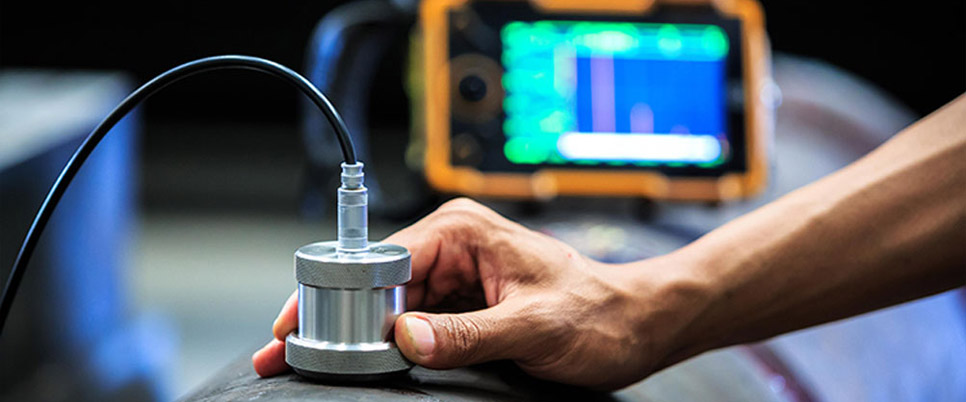
Latest Technologies in Non-Destructive Testing at IITNDT
Non-Destructive Testing (NDT) has become the backbone of modern industrial safety and quality assurance. From oil & gas pipelines to aerospace components and infrastructure projects, industries rely on advanced inspection technologies to detect defects without damaging materials. At IITNDT, the focus is on equipping professionals with the latest NDT technologies that meet global industry standards and future demands.
The Evolution of Non-Destructive Testing
Traditional NDT methods such as Ultrasonic Testing (UT), Radiographic Testing (RT), Magnetic Particle Testing (MT), and Penetrant Testing (PT) are still widely used. However, modern industries now demand faster, more accurate, and data-driven inspection techniques.
As a leading training and inspection institute in Kerala, IITNDT provides expertise in both conventional and advanced NDT methods, ensuring professionals are industry-ready.
Advanced NDT Technologies Available at IITNDT
1. Phased Array Ultrasonic Testing (PAUT)
PAUT is one of the most advanced ultrasonic inspection methods used today. It uses multiple ultrasonic elements and electronic time delays to create precise beam angles and detailed images of internal structures.
Key Benefits:
- High accuracy defect detection
- Real-time imaging
- Faster inspection of welds and components
IITNDT offers practical training and services in PAUT for industries like oil & gas, fabrication, and power plants.
2. Time of Flight Diffraction (TOFD)
TOFD is widely used for detecting and sizing cracks in welded joints with exceptional accuracy.
Why TOFD Matters:
- Highly reliable crack detection
- Precise sizing of flaws
- Reduced need for radiography
This technology is essential for critical infrastructure inspections where safety is paramount.
3. Automated Ultrasonic Testing (AUT)
AUT uses robotics and automated scanners to perform inspections with minimal human intervention.
Advantages:
- Consistent results
- Faster inspections
- Ideal for pipelines and large structures
Automation reduces errors and improves inspection efficiency.
4. Eddy Current Testing (ECT) & Tube Inspection
ECT is particularly useful for detecting surface and near-surface defects in conductive materials.
Applications include:
- Heat exchanger tubes
- Aircraft components
- Power plant equipment
IITNDT provides ECT tube inspection training and services to meet industrial needs.
5. Magnetic Flux Leakage (MFL)
MFL technology is widely used for inspecting storage tanks and pipelines.
Key Uses:
- Corrosion detection
- Thickness measurement
- Tank floor inspection
This method plays a vital role in preventing industrial accidents.
6. Positive Material Identification (PMI) & Advanced Material Testing
PMI verifies the chemical composition of materials using advanced analyzers.
It is critical for:
- Petrochemical industries
- Power plants
- Manufacturing quality control
IITNDT also offers hardness testing, ferrite testing, and holiday testing as part of its advanced inspection services.
Why Choose IITNDT for Advanced NDT Training?
IITNDT stands out due to its comprehensive training approach:
- Hands-on laboratory training with modern equipment
- Courses aligned with international certifications
- Industry-experienced trainers
- Placement-oriented programs
The institute offers certifications such as ASNT, CSWIP, BGAS, and API, preparing candidates for global opportunities.
Conclusion
As industries move toward automation and smarter inspection systems, mastering advanced NDT technologies is essential for engineering professionals. With state-of-the-art facilities, expert training, and globally recognized certifications, IITNDT continues to lead the way in shaping the future of Non-Destructive Testing.
Whether you are a fresher aiming to enter the inspection field or an experienced professional upgrading your skills, learning the latest NDT technologies at IITNDT can open doors to rewarding career opportunities worldwide.